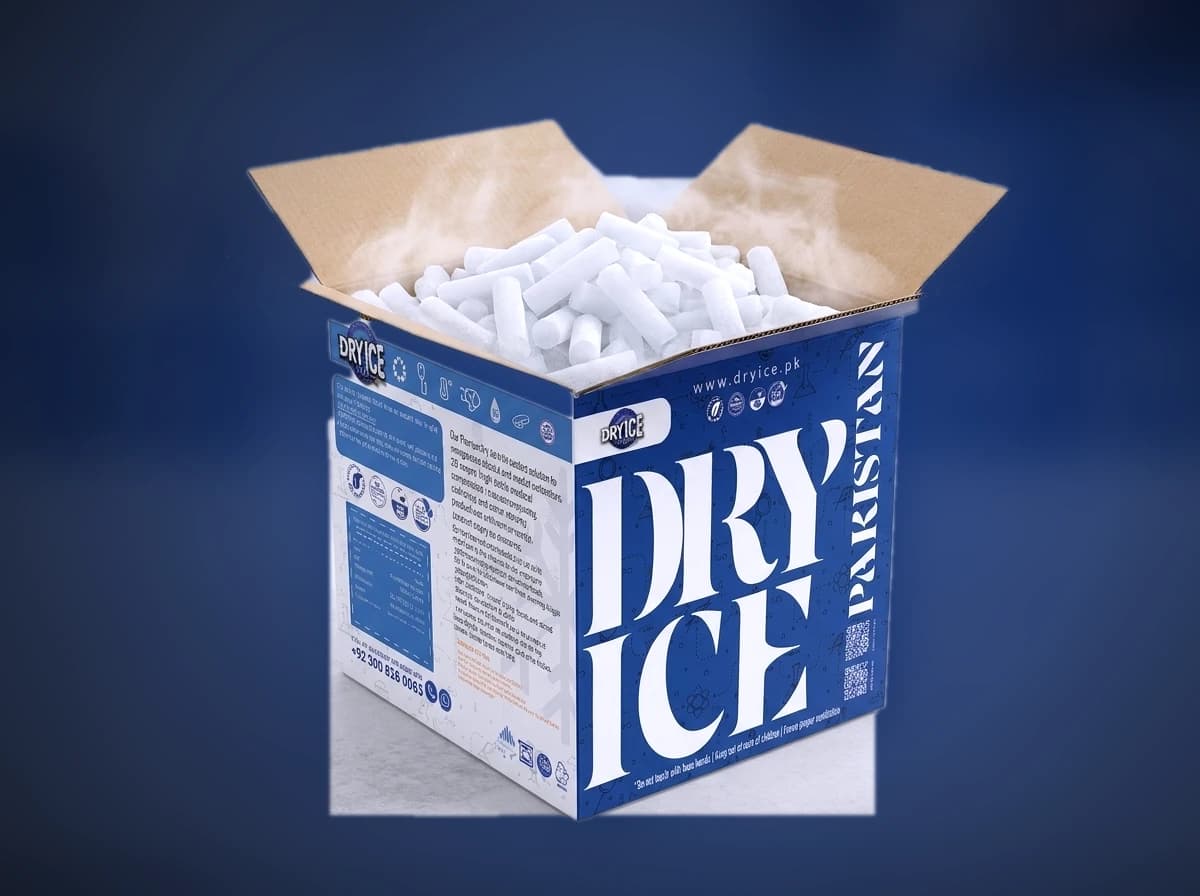

Want to create thick, low-lying fog with dry ice? The basic method is simple: place warm water in a sturdy open container, then add dry ice gradually while wearing insulated gloves or using tongs. The visible cloud forms quickly and flows over the rim, making it useful for events, photography, displays and supervised science demonstrations.
Safety matters just as much as the effect. Dry ice is solid carbon dioxide at approximately −78.5°C. It can cause cold burns on contact, releases CO₂ gas as it sublimates, and must never be sealed in an airtight container. Always work in a well-ventilated area and keep children and pets away from the setup.
Quick answer: how do you make smoke with dry ice?
Fill a large, stable bowl or bucket about halfway with warm water. Put on insulated gloves or use tongs, then add a small amount of dry ice. Dense white fog should begin immediately. Add more dry ice in small batches for more output, and refresh with warm water when the effect slows.
The visible cloud is commonly called “smoke,” but it is better described as fog: the very cold dry ice cools moist air and water vapour around the container, producing tiny suspended water droplets. Carbon dioxide gas itself is invisible.
What you need
Prepare everything before you open or handle the dry ice so the process stays controlled and you do not need to move around while holding extremely cold pellets.
- Dry ice pellets or pieces suitable for the effect.
- Warm water for a faster, denser initial fog effect.
- A large sturdy bowl or bucket that remains open and stable.
- Insulated gloves or tongs for handling.
- A well-ventilated area with clear space around the setup.

Avoid sealed containers. We also recommend avoiding thin or delicate glass for this effect because rapid temperature changes can stress the material. A stable metal or durable plastic container is a more practical choice.
Step 1: prepare a safe fog setup
Place the bowl or bucket on a flat, stable surface where people cannot easily knock it over. Keep the setup away from children, pets, food-service traffic and confined corners. If you are indoors, make sure the room has effective ventilation and do not use dry ice in a small sealed room.
- Place the container on a stable surface.
- Fill it roughly halfway with warm water.
- Keep the surrounding area open and ventilated.
- Keep children and pets away from the container and unused dry ice.
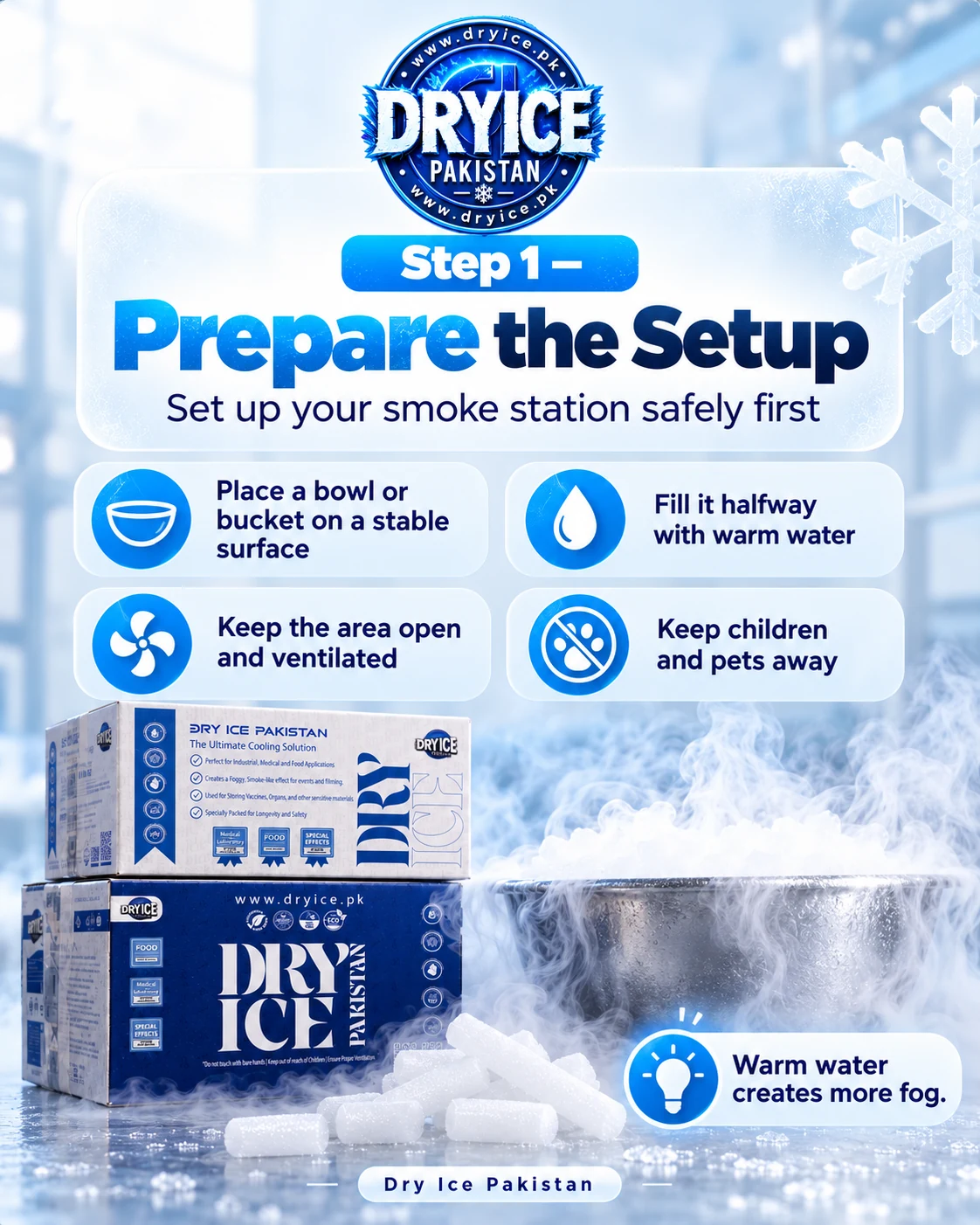
Warm water generally creates a more vigorous fog effect than cold water because it transfers heat to the dry ice more quickly. The trade-off is that faster sublimation also consumes dry ice faster, so use only the amount you need.
Step 2: add dry ice carefully
Put on insulated gloves or use suitable tongs before touching the dry ice. Add the pellets slowly rather than dropping a large quantity in at once. This gives you better control over the fog and reduces splashing.
- Wear insulated gloves or use tongs.
- Add a small batch of dry ice to the warm water.
- Allow the fog to develop and flow over the container.
- Add more dry ice gradually only if you need a stronger effect.
- When fog output drops, add more warm water rather than crowding the container with excess dry ice.

How to control the amount of fog
Three variables make the biggest practical difference: water temperature, dry ice quantity and container surface area. Warmer water can give a stronger initial effect; adding dry ice in small batches lets you control output; and a larger open bowl gives the fog more room to spill outward.
For a longer event, keep extra warm water ready. As the water cools, fog output usually weakens. Replacing or refreshing some of the water can restore the effect without adding an unnecessarily large amount of dry ice.
Important dry ice safety rules
Dry ice can be used safely when the basic handling rules are respected. The most important precautions are simple and should apply whether you are creating a small demonstration or a professional event effect.
- Never touch dry ice with bare hands. Use insulated gloves or suitable handling tools.
- Never seal dry ice in an airtight container. CO₂ gas is continuously released and pressure can build.
- Use dry ice only with adequate ventilation. CO₂ can accumulate in confined spaces.
- Keep dry ice away from children and pets.
- Do not ingest dry ice.
- Do not lean directly over the container and deliberately inhale the fog.

For complete storage, handling and transport precautions, read our Dry Ice Safety & Handling Guide.
Best container for a dry ice fog effect
Choose a wide, stable and open container. Metal bowls and sturdy buckets are common practical choices. Avoid anything that can be sealed by pressure or a tight lid while dry ice is inside. Thin glass is also a poor choice because rapid temperature change can create thermal stress.
Do not place dry ice into bottles, jars or other closed vessels for a fog demonstration. The setup should always provide an unrestricted path for carbon dioxide gas to escape.
Using dry ice fog at events
For weddings, stage effects, photography or product displays, plan the effect around the venue rather than simply adding more dry ice. Check ventilation, foot traffic, electrical equipment, floor conditions and where the container will be placed. Fog can reduce visibility near the floor, so keep walkways, stairs and exits clear.
If you are planning an event in Pakistan, see our dry ice for events and fog effects page for supply and venue-planning guidance.
Pro tips for better fog
- Use warm water: it generally produces a stronger initial fog than cold water.
- Add dry ice in small batches: easier control is usually better than one large addition.
- Refresh the warm water: fog slows as the water cools.
- Use a larger open bowl: more surface area can help create a broader visible effect.
- Test before the event: container size, room conditions and water temperature can change the result.

How much dry ice do you need?
There is no single amount that fits every fog effect. The required quantity depends on the size of the container, desired fog intensity, duration, water temperature, room conditions and how frequently you refresh the setup. For planning, use our dry ice calculator as a starting point, then test the actual setup before an important event.
For retail orders, view available options on our dry ice products page. If you are unsure which quantity is suitable, share the venue, duration and intended effect with our team before ordering.
Common mistakes to avoid
- Handling dry ice without protective gloves or tongs.
- Using it in a closed or poorly ventilated room.
- Trying to make the effect stronger by sealing the container.
- Using a fragile or unstable container.
- Adding too much dry ice at once and losing control of the setup.
- Allowing children or pets close to unused dry ice or the fog container.
Where to buy dry ice for fog effects in Pakistan
Dry Ice Pakistan supplies dry ice for events, experiments, cold-chain applications, food transport and other suitable uses. Our team can help you plan the quantity and handling approach for your requirement.
WhatsApp: 0300-8260063
Website: www.dryice.pk
You can also explore our dry ice applications or contact Dry Ice Pakistan with your city, required date, duration and use case.
Final takeaway
To make dry ice fog safely, use a sturdy open container, warm water, insulated gloves or tongs and good ventilation. Add dry ice gradually, keep the setup away from children and never seal dry ice in an airtight container. A controlled setup produces a better effect and keeps safety at the centre of the experience.