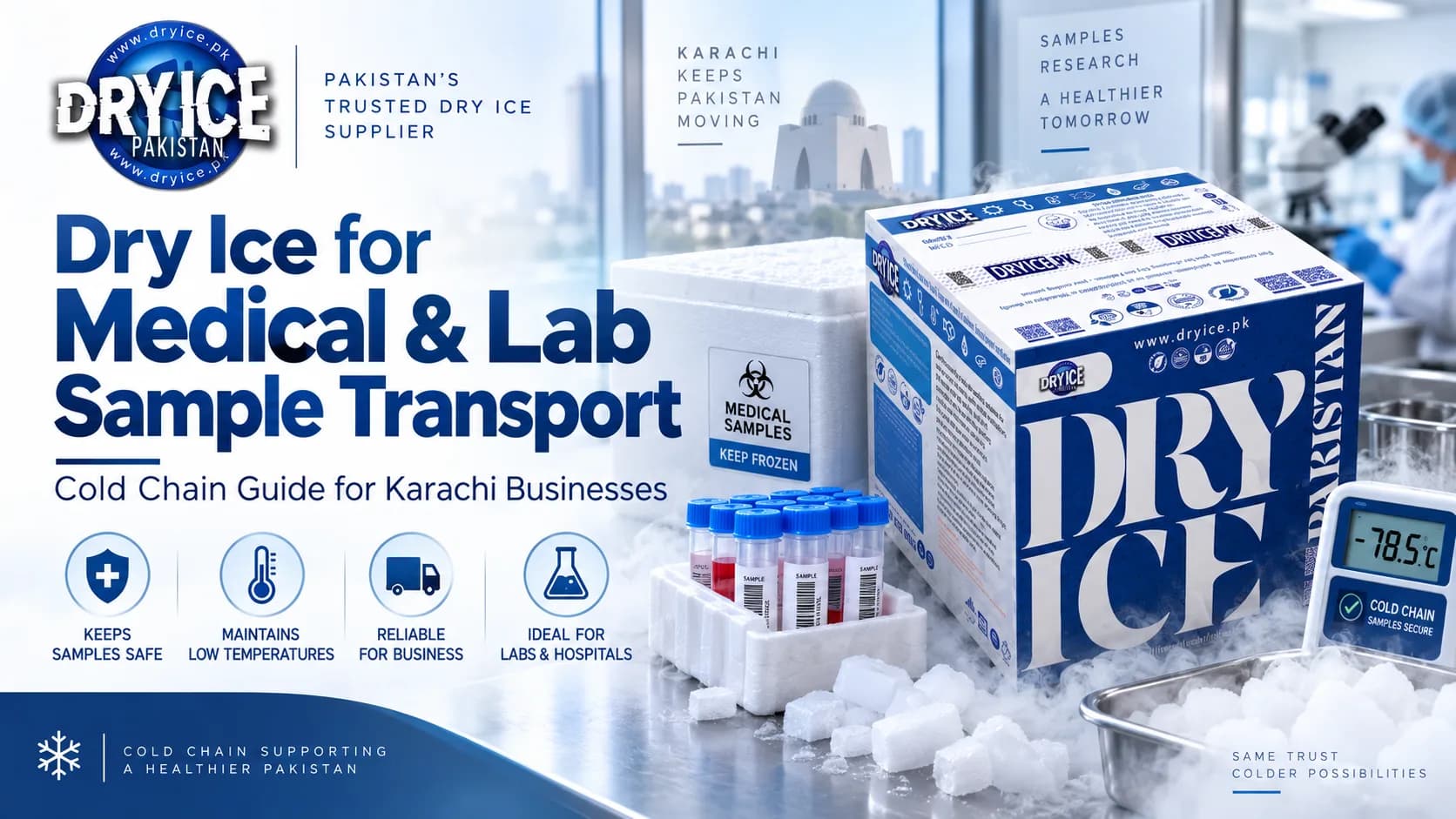
Dry ice is widely used in cold-chain logistics when a shipment protocol requires temperatures far below those provided by ordinary ice or standard chilled packs. For Karachi laboratories, diagnostic businesses, research operations and healthcare logistics teams, the key question is not simply “can we put samples on dry ice?” but whether the specific material, container and transport protocol is approved for dry ice.
This guide explains practical planning for dry ice medical and lab sample transport. It is logistics guidance, not clinical advice. Always follow the sample owner’s validated temperature range, biosafety rules, packaging instructions, carrier requirements and applicable regulations.
Quick answer: when is dry ice suitable for lab sample transport?
Use the written sample protocol as the decision point
Dry ice can be suitable when the written handling protocol specifically calls for frozen or ultra-cold transport compatible with approximately −78.5°C dry ice conditions. It is not appropriate for every specimen, reagent, medicine or diagnostic item. Some materials require refrigeration rather than freezing; others have narrow validated ranges. Confirm the requirement before packing.
Why laboratories use dry ice in the cold chain
Dry ice provides strong cooling without producing liquid meltwater and can be packed around a secondary container inside an insulated shipper. Those characteristics make it useful for selected frozen biological materials, research samples and other temperature-sensitive consignments whose documented procedure permits dry ice.
It also sublimates continuously into CO₂ gas, so packaging and ventilation need to be designed around that behavior rather than treating dry ice like ordinary water ice.
Start with the sample protocol, not the dry ice quantity
Before calculating kilograms, identify the required transport temperature, maximum transit time, packaging standard, sample classification and contingency plan. A sample that must remain refrigerated at 2–8°C should not automatically be placed directly against dry ice. Likewise, a frozen protocol may require secondary packaging or separation to prevent physical contact with the primary container.
A practical packaging hierarchy
Primary, secondary and insulated outer packaging
A robust shipment normally separates the sample from the external transport environment through multiple layers. The exact configuration depends on the material and regulations, but teams commonly think in terms of a secure primary container, leak-resistant secondary containment where required, absorbent or protective material as appropriate, then an insulated outer shipper with the cooling medium arranged according to the validated procedure.
Dry ice should never compromise the integrity of sample tubes, caps or secondary packaging. Secure the contents so they do not shift as dry ice sublimates and creates additional free space.
How much dry ice should a Karachi shipment use?
The required amount depends on transit duration, insulated box performance, external heat, payload mass, starting temperature and delay risk. Karachi’s warm conditions can increase heat load, especially during vehicle loading, traffic delays and outdoor handoffs. Use the dry ice calculator for an initial estimate, then validate critical shipments against the actual packaging system.
For regular laboratory routes, recording departure quantity, arrival condition and transit time over several shipments can help build a more useful operational baseline than relying on a generic rule.
Why thermopole or EPS insulation matters
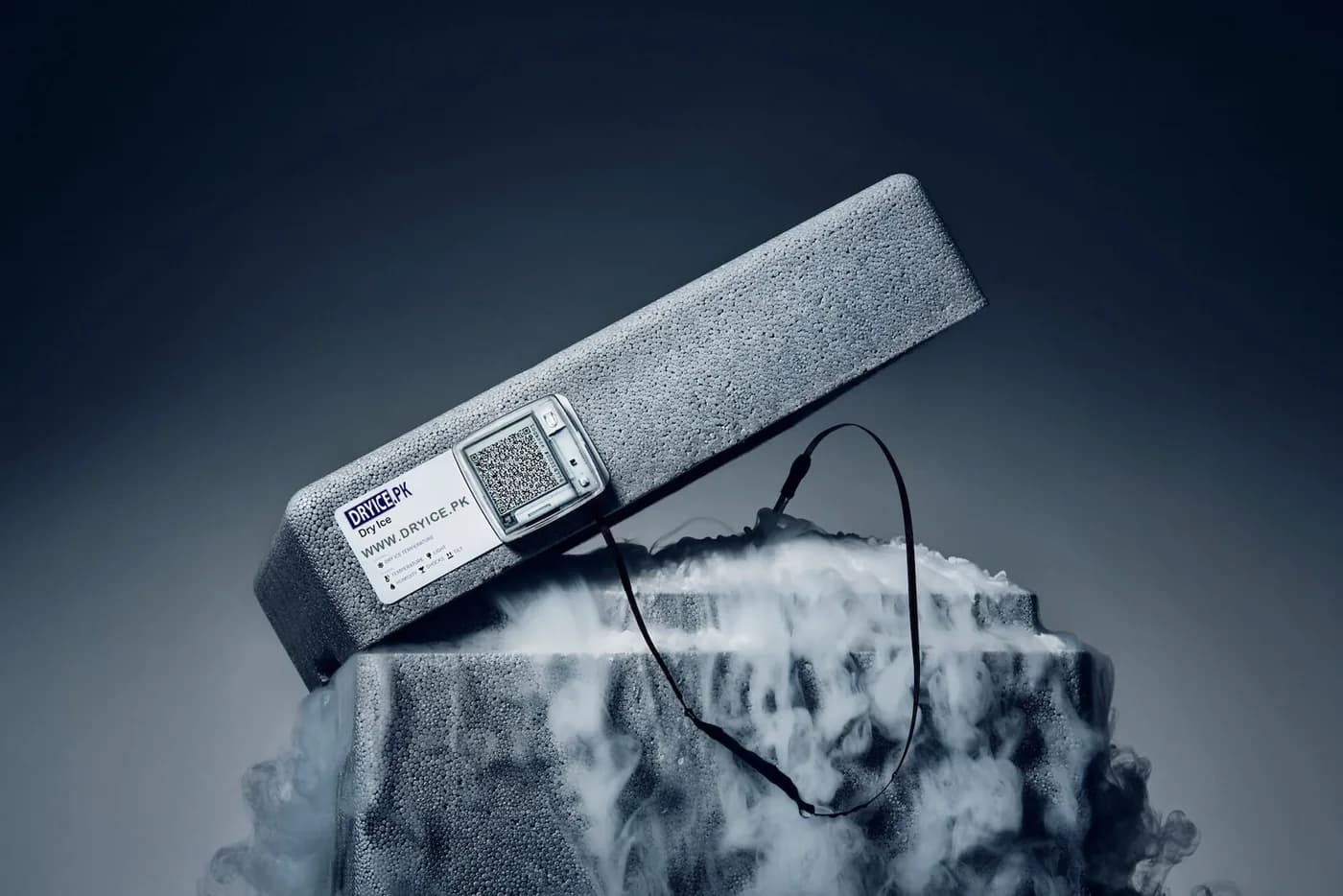
Expanded polystyrene (EPS) reduces heat transfer while keeping shipment weight manageable. Dry Ice Pakistan supplies retail dry ice in insulated EPS/thermopole packaging, and business users can discuss packaging requirements when planning recurring orders. Insulation alone does not make a shipment compliant; the complete package must suit the material, carrier and route.
Dry ice and UN1845 transport considerations
Carrier rules and markings should be checked before dispatch
For air and carrier shipments, dry ice is commonly identified as UN1845, Carbon dioxide, solid, and packaging/marking requirements may apply. Carrier and aviation rules can differ by shipment type and quantity. The official FAA and carrier references linked with this article are useful starting points, but the shipper remains responsible for following the rules that apply to the actual consignment.
Ventilation and pressure safety
As dry ice sublimates, it produces carbon dioxide gas. The outer system must allow gas to vent safely; never create an airtight dry ice package. Pressure can build in sealed containers. Transport and staging areas also need appropriate ventilation because CO₂ can displace oxygen in confined spaces.
Review our dry ice health and safety guide and train staff who routinely handle dry ice.
Handling dry ice inside a laboratory or dispatch area
Use insulated gloves or suitable tools to prevent cold burns. Plan the packing station so staff do not need to hold pellets unnecessarily. Keep the process away from children and unauthorized personnel, and avoid accumulating dry ice in small unventilated rooms, walk-in spaces or vehicles.
Karachi delivery planning for temperature-sensitive consignments
Karachi traffic, outdoor heat and handoff delays can all affect the thermal budget. Record the required pickup time, planned route, expected arrival, receiving contact and what happens if delivery is delayed. A technically good package can still fail operationally if the receiving team is unavailable or the shipment sits in the sun.
Choosing between 2kg, 5kg, 10kg and business supply
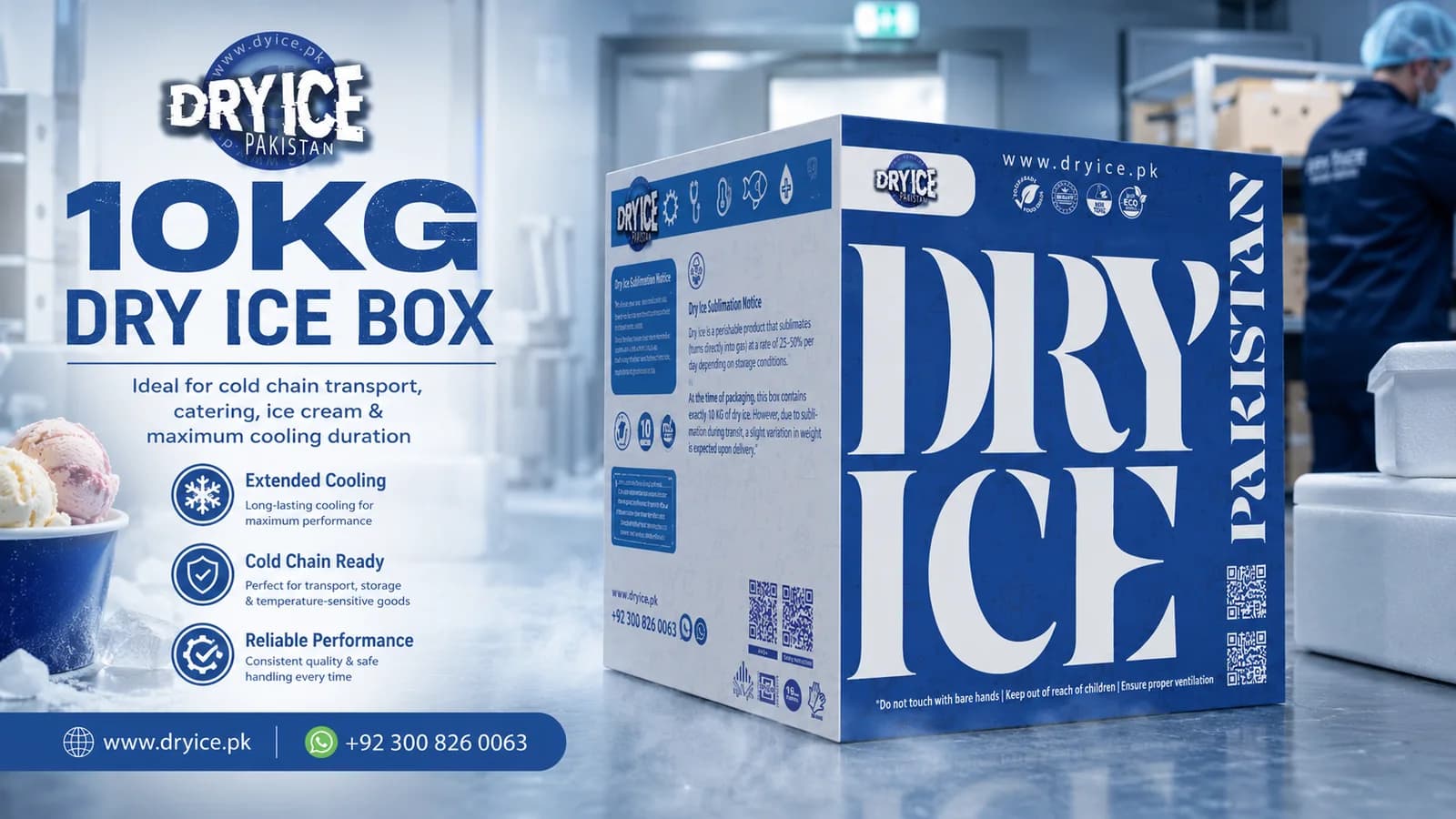
Small retail packs can support limited, protocol-approved requirements where the route and thermal load are modest. Larger packs provide more cooling reserve, while recurring laboratory or logistics operations may be better served by a planned business supply arrangement. View the available dry ice packs or contact us with your route and quantity requirements.
What information to send when requesting a quote
- Required dry ice kilograms or estimated shipment size.
- Pickup/delivery city and required date/time.
- Expected transit duration.
- Insulated packaging requirement.
- Whether the process calls for standard retail pellets or another format.
- Any carrier-specific packing constraints known to your team.
Do not send confidential patient or personally identifiable sample information when requesting a dry ice supply quotation; the supplier only needs the logistics and cooling requirement.
Common cold-chain mistakes to avoid
Common problems include assuming all medical materials should be frozen, underestimating delays, sealing the dry ice airtight, allowing sample tubes to move as pellets sublimate, and relying on an untested box for a critical route. Another mistake is treating a dry ice supplier’s general estimate as a substitute for the laboratory’s validated sample protocol.
Build a repeatable cold-chain process
Document the route, packaging and dry ice load
Operational record to keep
For recurring shipments, document the box type, payload, dry ice quantity, packing sequence, dispatch time, route, arrival time and any temperature-monitoring results used by your quality system. A repeatable process is easier to review and improve than rebuilding the shipment from memory each time.
Final takeaway
Dry ice can be a valuable cold-chain tool for selected medical and laboratory shipments, but suitability begins with the sample protocol. Use the correct insulated packaging, keep the system safely vented, plan for Karachi heat and delays, follow carrier requirements, and validate critical transport rather than relying on generic assumptions. Dry Ice Pakistan can supply the cooling medium and help with practical quantity and packaging coordination; the sample owner remains responsible for clinical, biosafety and regulatory requirements.