
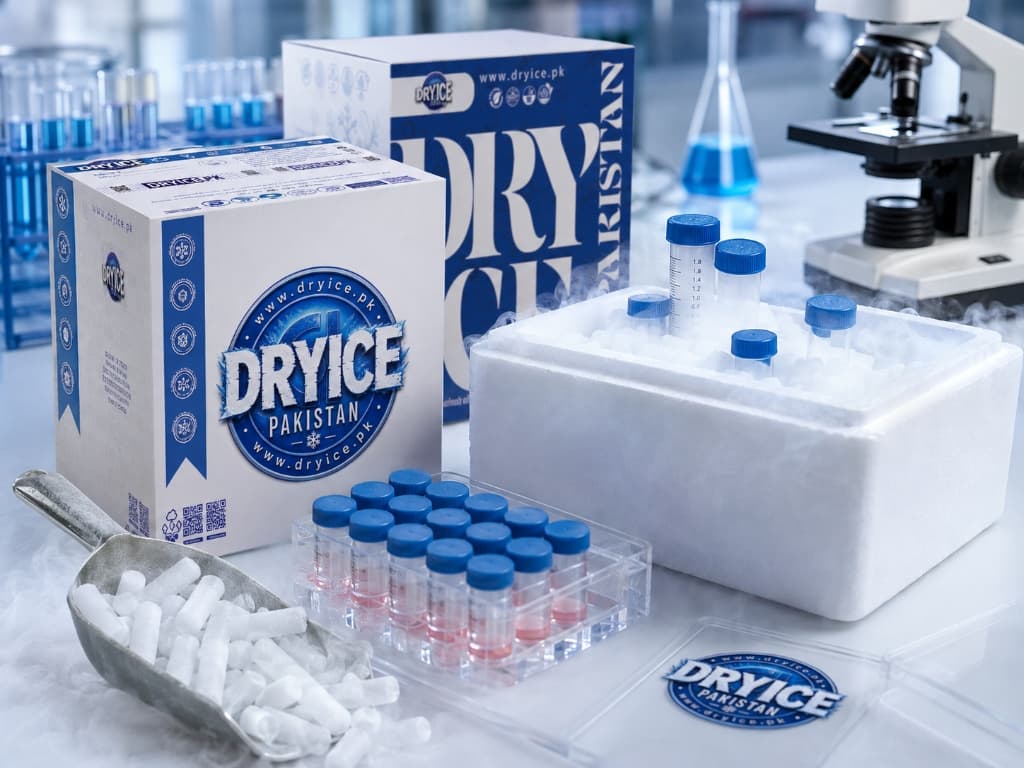
Start with the Written Sample Protocol
Some specimens and reagents require frozen or ultra-cold transport while others must remain chilled. Confirm the exact requirement before selecting dry ice.
Packaging and Route Planning
Use secure primary and secondary containment as required by the sample protocol, then place the shipment inside suitable insulated packaging. Plan enough cooling reserve for the expected route and realistic delay margin.
- Secure sample containers
- Use suitable insulation
- Allow carbon dioxide venting
- Confirm receiving availability
Build a Repeatable Route Record
For recurring sample logistics, record the box type, payload, dry ice load, dispatch time, arrival time and any approved temperature-monitoring results. This creates a stronger operational baseline than a generic duration promise.
Frequently Asked Questions
Is dry ice suitable for all laboratory samples?
No. Suitability depends on the written sample or reagent protocol.
How much dry ice should a lab shipment use?
It depends on transit time, insulation, payload, ambient heat and delay margin. Critical routes should be validated with the actual packaging system.
Can the box be sealed tightly?
No. Dry ice releases carbon dioxide gas and must never be sealed in an airtight container.
Related Dry Ice Resources
NEED CURRENT AVAILABILITY OR DELIVERY DETAILS?
Send your city, required quantity, application and required date/time on WhatsApp for current availability and dispatch guidance.